The level switches use float to sense the liquid surface level, actuating an electrical switch by the motion of the float. This mechanism uses a mercury tilt bulb, tilted by a magnet’s attraction to a steel rod lifted into position by a float. By positioning the steel rod either closer to or farther away from the magnet, the float directly senses the liquid level. The mercury bottle tilts to change the switch’s electrical status if the rod comes close enough to the magnet.
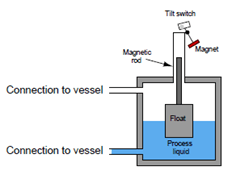
A feature of this design is complete isolation between the electrical components and the “wet” components sensing the liquid level. The steel rod moves inside a non-magnetic metal tube, with the tube sealing process fluid pressure from escaping while still allowing the magnetic tilt switch to sense float position.
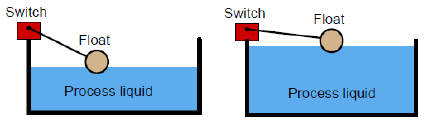
For direct installation in open (vented) process vessels, resembling the float valve assembly on a water-flush toilet is an example of simpler float switch designs. To sense the float’s position in an environment where no isolation needs to exist between the switch and the process fluid(s), the “limit” style switching element will use here, including inductive proximity switches.
 Instrumentation Basics